
Jen Rose Smith
September 19, 2025
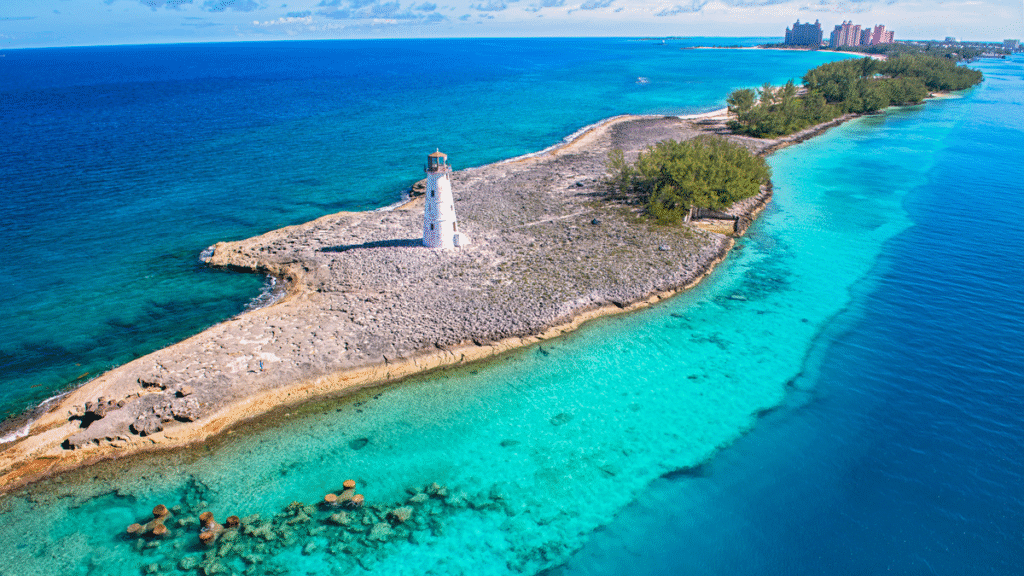
The Paradise Island lighthouse marks the entrance to Nassau’s harbour. Getty Images
Four change makers took home top honors at the annual Virtuoso Travel Awards.
Discerning travelers know: How you travel matters. At this year’s Virtuoso Travel Week in Las Vegas, hoteliers, tour operators, cruise executives, and travel advisors gathered to recognize the people, companies, and places inspiring conscious travelers today. Recognized by their industry peers, the 2025 Sustainable Travel Award winners offer fresh ways to travel deeper.
“Tourism is a force for good, and when we plant these seeds, they come to fruition,” says Malia Asfour, director of the Jordan Tourism Board of North America, which received the 2025 Sustainable Destination Award for the country’s investment in small social enterprises, many of them run by women.
This year’s Supporting Local Economies Award winner, Intrepid Travel, is bringing more Indigenous-led tours to communities around the world. “This isn’t tourism for outsiders; it’s an invitation into a way of life that’s been sustained for centuries,” says Leigh Barnes, Intrepid’s president of the Americas.
Travelers hoping to experience the award-winning programs firsthand can join trips ranging from the Middle East to the Caribbean, and from Aztec canals to red-rock deserts. Here are the 2025 winners.
Building Resilient Seas in the Bahamas
Perhaps the iconic coral-pink facade of the 1,200-room Royal at Atlantis nods to the resort’s industry-leading sustainability work happening just off Paradise Island in the Caribbean Sea. This year, the resort won Virtuoso’s Protecting the Planet Award for its nonprofit Atlantis Blue Project Foundation’s two decades of ocean stewardship work aimed at keeping marine ecosystems resilient.
From a first-of-its-kind coral gene bank housing colonies for replanting to the expansion of a Bahamian marine park (to 1.4 million acres), some of the foundation’s greatest achievements rely on support from both locals and travelers.
Guests at Atlantis can join marine experts to snorkel alongside eagle and spotted rays, a program whose revenue goes to the nonprofit’s conservation work. Past travelers – along with local schoolchildren and other volunteers – have helped to plant thousands of mangrove seedlings provided by the foundation to fortify protected wetlands.
“It’s about inspiring Bahamians and travelers to see how connected their lives are to the ocean,” says Kristen Johnson, the resort’s marine education and programs officer. “When visitors and locals help us with mangrove plantings, when local fishermen share stories about [critically endangered] fish sightings, you can feel the community’s investment in protecting these waters.”

Shrak bread, a traditional flatbread, is a staple in many Jordanian meals. Ghassan Sela
Mapping Meaningful Travel in Jordan
When the Jordan Tourism Board launched its Meaningful Travel Map in 2018, it charted a path for travelers to support 16 social enterprises that go far beyond the typical itinerary. These experiences span Jordan from its northern hills and olive groves to its southern desert communities, home to Bedouin tribes.
“In less-traveled parts of Jordan, there are communities, cultures, and artisans that don’t generally see tourists,” says Janine Jervis of the Jordan Tourism Board. “The map is a platform for us to showcase and highlight smaller enterprises, whether it’s hiking, a local homestay, or a cooking class where you’re making food that’s indigenous to that area.”
Many of the map’s businesses support women in traditional communities, who have long faced economic barriers. At the Iraq Al Amir Women’s Cooperative, members build financial independence through weaving, paper-making, and ceramics – and offer travelers lessons in these heritage crafts. At the home-cooking school Beit Khairat Souf in the northern town of Souf, local women celebrate Jordanian flavors while forging their own path from poverty.
Already, travel leaders are using the map to chart immersive journeys: During G Adventures’ ten-day Jordan itinerary from Amman to Petra, visitors to Beit Khairat Souf have the chance to experience a more personal form of tourism by joining in the olive harvest, drinking roasted acorn coffee, and dining at a communal table in the courtyard of a family home. “I think in these places, travelers can get genuine insight into what the Jordanian people are like,” Jervis says. “What impacts visitors the most is their warmth, and the welcome.”

Trajineras (gondola-like boats) ferry passengers across 110 miles of the Xochimilco canals.Getty Images
Revitalizing Ancient Farms in Mexico
Floating Aztec gardens in Mexico City’s present-day Xochimilco neighborhood once nourished an empire, but these sustainable agricultural practices are now at risk amid urban development.
Tour operator Journey Mexico, which won the 2025 Celebrating Culture Award, took action to protect Xochimilco’s history in early 2025 by adopting a chinampa (floating garden) and providing a place for young farmers to learn the specialized technique that involves building layers of vegetation and mud into fertile man-made islands.
“Supporting the chinampas lets us celebrate culture not just by showing it to travelers, but by sustaining it,” says Journey Mexico CEO Zach Rabinor. His company partners with the agricultural training program Escuela Campesina, which supports farmers as they adopt and cultivate their own plots.
Travelers can see the positive impact in action by visiting Xochimilco’s chinampas during private, fully customizable tours of Mexico City and supporting a project that bridges biodiversity, cultural heritage, and economic stability.

Spider Rock, a sandstone spire within Canyon de Chelly National Monument, is named after a Navajo deity, “Spider Woman.”Getty Images
Growing Indigenous-Led Experiences Globally
Letting locals lead is core to Intrepid Travel’s philosophy – and so is channeling positive impacts to the places and people that inspire us to leave home in the first place.
Last year, the company invested nearly $2 million in community initiatives, including a Peruvian women’s collective and an East African mountain gorilla clinic. Now, an expansion of Indigenous-led experiences is bringing travelers to the heart of native communities for authentic cultural encounters.
“Travelers should hear stories in the voices of the people who own them,” says Barnes. “Our role is to amplify, not to speak for.” On a five-day journey that debuts in 2026, from Zion National Park to the Grand Canyon, travelers will join Navajo guides to explore two lesser-known canyons: Owl and Rattlesnake. Meanwhile, a new weeklong trip to the American Southwest includes storytelling with Diné guides in the sacred Canyon de Chelly.
The journeys build economic resilience with every arrival. “We know tourism has the power to create jobs, preserve culture, and support reconciliation, but only if the benefits flow directly to the communities themselves,” says Barnes.
This approach is at the heart of a new five-day hiking trip through the Pueblos Mancomunados, highland villages in Oaxaca’s Sierra Norte, where tourism experiences such as traditional temescals (sweathouses) and family-hosted meals are designed and led by Zapotec guides.
“The entire community manages tourism on their terms,” Barnes explains. “The Pueblos Mancomunados are proof that Indigenous-owned tourism works.”